
A garage door is part of many daily routines, from leaving for work to accessing storage. When it opens slowly, makes new noises, or refuses to close properly, everyday routines can become frustrating. For homeowners needing garage door repair in Phoenix, AZ, service may involve springs, cables, rollers, tracks, openers, sensors, or related hardware. Southwest Garage Doors inspects residential garage-door systems and discusses repair or maintenance based on the condition of the door.

Which Repairs Help Restore Lifting And Lowering?
Springs help counterbalance the door’s weight. When a spring breaks or weakens, a door that once moved smoothly may become heavy or stop during a cycle. Damaged cables can also affect balance and movement. Because these components can operate under high tension, homeowners should avoid attempting repairs without proper training and equipment.
How Do Rollers And Tracks Affect Movement?
Rollers move along tracks as the door opens and closes. Worn rollers may cause squeaking, grinding, or rattling, while damaged or misaligned tracks can make the door drag, stick, or travel unevenly. Homeowners who need to repair garage door components may benefit from having rollers, tracks, and other moving parts checked together.
What Should Homeowners Know About Opener Problems?
A garage door opener controls powered movement. Problems may appear as delayed movement, incomplete travel, unexpected reversals, or unusual motor sounds. Sensors can also affect automatic operation. An obstruction, dirt, or misalignment may interfere with the safety system. A technician can check the opener, sensors, and mechanical parts to locate the source.
Why Do Safety Checks Matter?
The U.S. Consumer Product Safety Commission states that automatic residential garage door operators are subject to a mandatory federal consumer product safety standard. The CPSC also maintains guidance on non-reversing garage door openers and reversing protection.
How Can Phoenix Heat Affect Garage Door Components?
Phoenix weather is another practical consideration for garage-door systems. In August 2026, the National Weather Service recorded an average maximum temperature of 109.4°F in Phoenix. The city also recorded 31 days with temperatures of at least 90°F and 18 days reaching at least 110°F.
Extreme heat is part of the environment in which garage-door components operate. Prolonged exposure can contribute to wear or changes in some mechanical and electronic components, particularly when an existing issue is already present. Paying attention to changes in noise, movement, or opener performance can help homeowners recognize when a garage-door system may need inspection.
What Operating Signs Should Homeowners Notice?
Repair needs may start with small changes. A door may take longer to open, hesitate, make a popping or grinding sound, or stop short of its normal position. These symptoms can have different causes. Replacing one part without checking the system may leave the actual problem unresolved.
When a garage repair involves the door itself, an inspection can help determine whether springs, cables, rollers, tracks, openers, sensors, or related hardware need adjustment, repair, or replacement.
How Can Routine Service Support Daily Function?
For homeowners comparing garage door repair services near Phoenix, AZ, it can help to ask what parts will be inspected and what the recommended work addresses. At Southwest Garage Doors, we provide residential garage-door repair and maintenance for springs, cables, rollers, tracks, openers, sensors, and related hardware.
FAQs
Can Unusual Garage Door Sounds Indicate A Problem?
They can. New squeaking, grinding, rattling, or popping sounds may be linked to worn rollers, loose hardware, track problems, opener issues, or other components that need inspection.
How Often Should An Automatic Garage Door Opener Be Tested?
The CPSC recommends regular testing of the opener’s reversing function and inspection of the door and opener every 30 days.
What Should Homeowners Do When Spring Breaks?
A broken spring can make the door heavier than normal. Homeowners should avoid adjusting or replacing a high-tension spring themselves and arrange professional service.
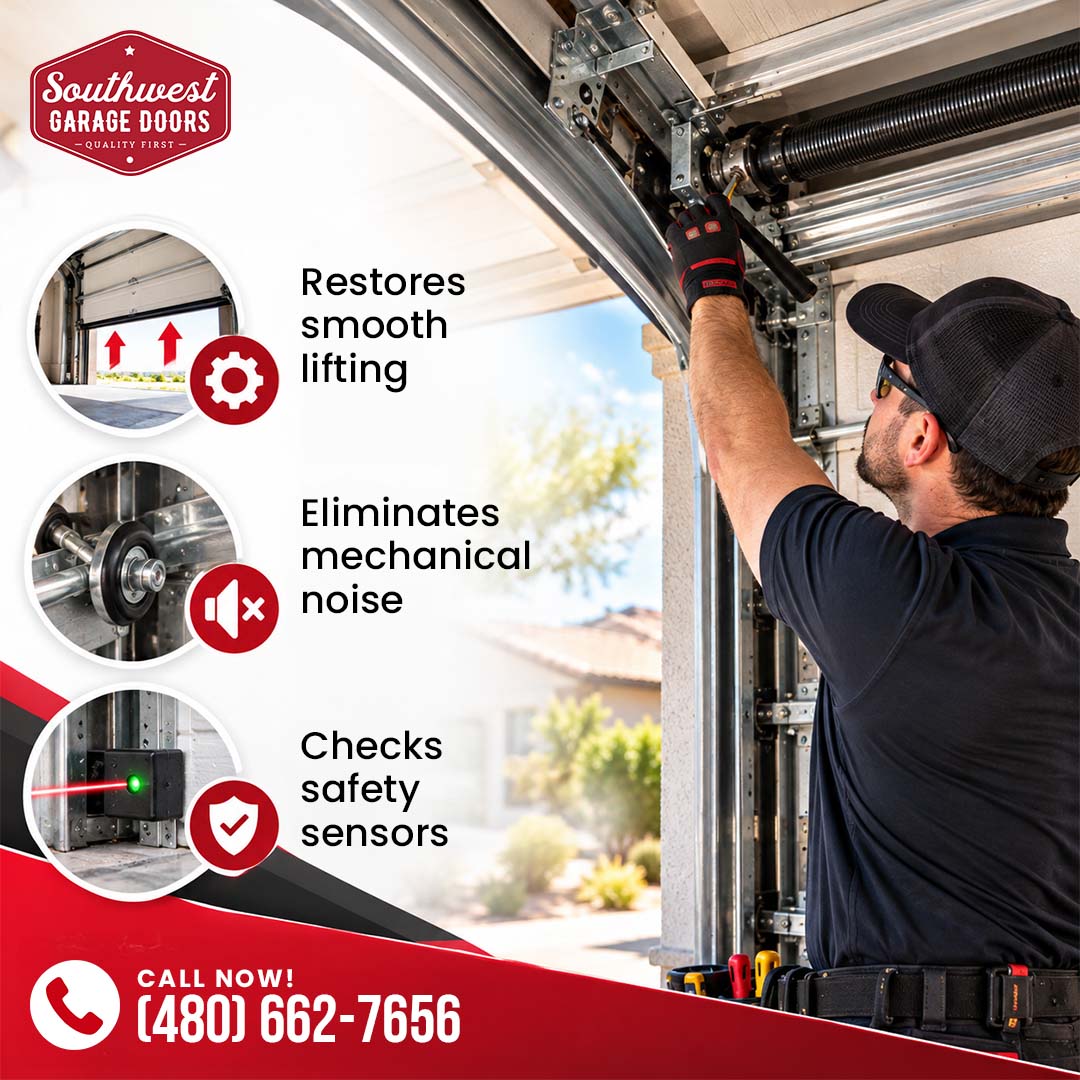
Schedule a Garage Door Assessment
Changes in movement, sound, or response are worth noticing. Southwest Garage Doors can assess residential garage-door systems and discuss repair or maintenance options for components involved in everyday operation. Call us at (480) 662-7656 or email danc@swgaragedoors.com to discuss repair needs.